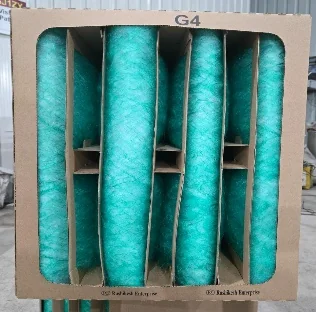
Dry X Box Filter
| Specifications | |
|---|---|
| Paint Mist Arrestance | Up to 96% |
| Paint Storage Capacity | 7 – 15 kg |
| Nominal Air Flow | 850 m³/hr |
| Moisture Resistance | Up to 80% rel. hum. |
| Thermal Stability | 85°C |
| Fire Class | Very Flammable |
Application
Multi-stage dry separation system for modern industrial environments. Uses specialized disposable cardboard filtration with no water or chemical additives — ideal for new paint booth installations and brownfield plant modernizations.
Features & Benefits
- Operates entirely without water or chemical additives, eliminating paint sludge disposal
- Semiautomatic design — streamlined, reliable alternative to fully automated wet scrubbers
- Optimized airflow reduces CO₂ emissions and minimizes total energy consumption
- Compact modular design suitable for existing plant retrofits
Special Features
| Feature | The Dry X Benefit |
|---|---|
| Environmental | Zero water usage; dry waste disposal only. |
| Financial | Lower CAPEX and reduced maintenance costs compared to wet systems. |
| Integration | Compact modular design suitable for existing plant retrofits. |
| Performance | High-capacity multi-stage filtration for consistent air quality. |
Dry X is a sophisticated, multi-stage paint overspray separation system engineered for the modern industrial environment. By utilizing specialized disposable cardboard filtration, Rushikesh Enterprises provides a robust, cost-effective solution for both new installations and brownfield plant modernizations.
The Rushikesh Advantage
As pioneers in dry separation technology, we have designed the Dry X to bridge the gap between traditional wet scrubbing and high-complexity automated systems.
- Sustainability Without Chemicals: Our system operates entirely without water or chemical additives, eliminating the costly and hazardous process of paint sludge disposal.
- Operational Simplicity: The semiautomatic design is the ideal choice for facilities seeking a technologically streamlined, reliable, and budget-friendly alternative to fully automated scrubbers.
- Energy Efficiency: By optimizing airflow and reducing mechanical overhead, Dry X significantly lowers CO₂ emissions and minimizes total energy consumption.
Engineering Sustainable Futures
The Dry X process is the culmination of years of field experience and technical innovation at Rushikesh Enterprises. We provide our clients with an environmentally responsible path to high-quality finishing, ensuring that your production line is as green as it is efficient.
Consultation: Contact our engineering team today to see how the Dry X system can be integrated into your specific manufacturing workflow.
Paint Arrester Filter
| Specifications | |
|---|---|
| Material Composition | 100% Micron Fine Glass Fibers |
| Binding Agent | Synthetic Thermosetting Resin |
| Filter Structure | Progressive Density (Gradient) |
| Dimensions | 800mm × 20 Metres (Roll) |
| Media Thickness | 80mm (Approx 3") |
| Performance Rating | G4 / MERV 8 |
| Average Arresting Efficiency | 92% |
| Mass Per Unit Area (GSM) | 550 g/m² |
| Initial Pressure Drop | 25 Pa |
| Max Operating Temperature | 175°C |
| Properties | Test Method | Unit | Specification | Results |
|---|---|---|---|---|
| Mass Per Unit Area (GSM) | ISO 9073-1 | g/m² | 450 – 600 | 550 |
| Thickness | ISO 9073-2 | mm | 100 ± 5% | 103 |
| Average Arresting Efficiency | ISO 9073-15 | % | 90 – 95 | 92 |
| Air Velocity | ISO 9073-15 | m/s | 0.5 – 1.0 | 0.85 |
| Paint / Dust Holding Capacity | NA | Lit/m² | 6 – 8 | 7 |
| Density | ISO 9073-5 | kg/m³ | 18 – 22 | 21 |
| Maximum Operating Temperature | NA | °C | 170 – 180 | 175 |
| Humidity Resistance | NA | — | — | Excellent |
| Initial Pressure Drop | NA | Pa | 20 – 35 | 25 |
| Final Pressure Drop | NA | Pa | 200 – 250 | 220 |
Application
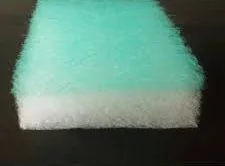
Dry separation filter for arresting paint overspray mist in automotive spray booth exhaust air. Progressive density gradient captures coarse particles at the air inlet (green side) and fine mists at the outlet (white side) — ensuring even loading throughout filter depth and preventing rapid surface blinding.
Features & Benefits
- Non-combustible and chemically resistant to solvents — maintains structural integrity under air load
- Synthetic thermosetting resin binding prevents fiber shedding into the paint finish
- Progressive density ensures even loading rather than quick surface blinding
- 80mm media thickness provides deeper tortuous path for increased paint-holding capacity
Special Features
- Maximizes booth uptime with high holding capacity — reduces changeout frequency
- Gradient structure prevents rapid static pressure spikes, maintaining constant airflow
- Highly effective at preventing harmful particulates from exhausting to atmosphere
- Available in standard 800mm × 20m rolls; custom cutting available
| Parameter | Specification | Industrial Rationale |
|---|---|---|
| Material Composition | 100% Micron Fine Glass Fibers | Non-combustible, chemically resistant to solvents, and excellent structural integrity under air load. |
| Binding Agent | Synthetic Thermosetting Resin | Ensures the fibers remain bonded and stable, preventing "fiber shedding" into the paint finish. |
| Filter Structure | Progressive Density (Gradient) | Critical Feature: The open weave on the air inlet (green side) catches larger particles, while the denser weave on the air outlet (white side) captures fine mists. This ensures the filter loads evenly throughout its depth, rather than blinding quickly on the surface. |
| Dimensions | 800mm (Width) × 20 Metres (Length) | A standard industrial roll size for high-volume changeouts or custom cutting. |
| Media Thickness | 80mm (Approx 3") | Provides a deeper "tortuous path" for particles, significantly increasing paint-holding capacity and reducing changeout frequency compared to standard 50mm (2") pads. |
| Performance Rating | G4 / MERV 8 (Typical) | The industry standard for high-efficiency paint arrestance in industrial exhaust systems. |
How Rushikesh Enterprises Supports Your Production
Our experience as suppliers means we recognize the balance between paint arrestance efficiency and system static pressure. A filter that traps too much air will starve your exhaust fan, while one that is too open will destroy your expensive fan blades and stack.
By choosing our 80mm progressive density media, you are selecting a product engineered to:
- Maximize Booth Uptime: Increased holding capacity means fewer shutdowns for filter changes.
- Maintain Constant Airflow: The gradient structure prevents a rapid spike in static pressure.
- Ensure Environmental Compliance: Highly effective at preventing harmful particulates from exhausting into the atmosphere.
Consultation: For volume pricing or to discuss customized roll widths for your specific booth configurations, please connect with our technical sales team at Rushikesh Enterprises.
Mat Filter
| Specifications | |
|---|---|
| Filter Class | M5 (ISO 16890 / EN 779) |
| Material | 100% Synthetic Polyester Fibers |
| Thickness Range | 20 – 25mm |
| Roll Size | 2000mm Width × 20m Length |
| Nominal Air Velocity | 0.5 m/s |
| Initial Pressure Drop | 60 – 70 Pa |
| Dust Holding Capacity | 500 – 600 g/m² |
| Temperature Resistance | Up to 100°C |
| Fire Rating | F1 per DIN 53438 |
Application
Medium-grade air filtration media for HVAC systems, paint spray booths, and industrial ventilation. Acts as a bridge between coarse pre-filters (G3/G4) and high-efficiency fine filters (F7/F9). Used as ceiling diffusion mats in paint booths to ensure laminar airflow and capture residual particles before they affect the paint finish.
Features & Benefits
- Install fluffy side toward incoming dirty air — deep particle penetration extends filter life significantly
- Progressive structure (denser toward clean-air side) maximizes dust-holding without rapid clogging
- Thermally bonded polyester construction for structural stability
- Effective against pollen, mold spores, cement dust, and textile fibers
Special Features
- 3 standard models: RE 500-20/20000, RE 500-22/20000, RE 500-25/20000
- Captures 50–65% of PM10 particles per ISO 16890 / EN 779
- Frequently installed upstream of HEPA or bag filters to extend their service life
- Suitable for industrial equipment protection against motor and electronics dust buildup
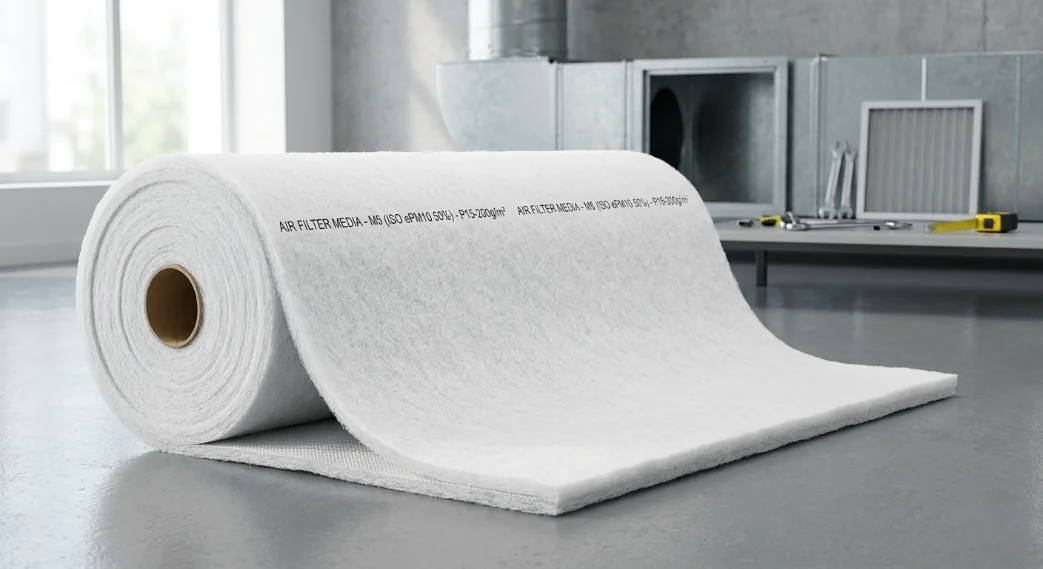
An M5 mat filter (formerly known as F5) is a medium-grade air filtration media typically used in HVAC systems, paint booths, and industrial ventilation. It acts as a bridge between coarse pre-filters (G3/G4) and high-efficiency fine filters (F7/F9).
Installation Note: When installing a filter mat, ensure the "fluffy" side faces the incoming dirty air and the smooth/printed side (often reinforced with a scrim or mesh) faces the clean air. This allows the dust to penetrate deep into the mat rather than just coating the surface, which significantly extends the filter's life.
1. Filtration Performance
Under the current international standards (ISO 16890 and the older EN 779), M5 filters are designed to capture medium-sized particles:
- Efficiency: They typically capture 50–65% of PM10 particles (particulate matter up to 10 microns).
- Target Particles: Effective against pollen, mold spores, cement dust, textile fibers, and large fine dust.
- Media Design: Usually made of thermally bonded polyester fibers with a progressive structure (denser toward the clean-air side) to maximize dust-holding capacity without clogging instantly.
2. Common Applications
- Paint Spray Booths: Specifically used as ceiling filters (diffusion mats) to ensure a laminar (smooth) airflow and catch any remaining particles before they can ruin a paint finish.
- HVAC Systems: Used in offices, schools, and retail spaces to provide better indoor air quality than a standard furnace filter.
- Pre-filtration: Frequently installed upstream of HEPA or bag filters in hospitals and laboratories to extend the life of those more expensive components.
- Industrial Equipment: Used to protect motors and sensitive electronics from dust buildup.
| Model | Filter Class | Thickness (mm) | Roll Size (mm/m) | Nominal Air Velocity (m/s) | Density (g/m²) | Dust Holding Capacity (g/m²) | Initial Pressure Difference (Pa) | Particle Holding Size (micron) |
|---|---|---|---|---|---|---|---|---|
| RE 500-20/20000 | M5 | 20 | 2000/20 | 0.5 | 320 | 500 | 60–65 | 10 |
| RE 500-22/20000 | M5 | 22 | 2000/20 | 0.5 | 550 | 580 | 65–70 | 10 |
| RE 500-25/20000 | M5 | 25 | 2000/20 | 0.5 | 600 | 600 | 65–70 | 10 |
Pocket Filter
| Specifications — RE M5 Series | |
|---|---|
| Filter Class | M5 (ISO ePM10 50%) |
| Standard Dimensions | 592 × 592 × 600mm |
| Pocket Options | 4 / 6 / 8 Pockets |
| Filter Area | 3.75 – 5.68 m² |
| Air Flow Range | 2050 – 4250 m³/hr |
| Initial Pressure Drop | 40 – 60 Pa |
| Final Pressure Drop (Replacement) | 250 Pa |
| Max Operating Temperature | 70°C – 80°C |
| Humidity Resistance | Up to 100% rel. hum. |
| Standard Performance Values | |
|---|---|
| Pocket Depth | 300mm, 360mm, 500mm, or 600mm |
| Recommended Final Pressure Drop | 250 Pa (for replacement) |
| Initial Pressure Drop | 40 – 60 Pa (depending on pocket count) |
| Max Operating Temperature | 70°C – 80°C |
| Humidity Resistance | Up to 100% relative humidity |
Application
High-efficiency filter for capturing fine dust, pollen, mold spores, spray paint dust, and textile fibers in HVAC and paint booth systems. M5-rated (formerly F5) per EN 779 / ISO ePM10 50% — designed for medium-efficiency particulate capture in industrial air handling units serving paint shops and general manufacturing.
Features & Benefits
- Deep pockets allow high volume of particulate matter before pressure drop reaches replacement level
- Aerodynamic wedge-shaped pockets ensure uniform airflow — prevents dead zones
- Ultrasonically welded pockets prevent leaking or bursting under high air pressure
- Available with galvanized steel, plastic, or aluminium header frames
Special Features
- High-performance synthetic melt-blown or glass fiber progressive media
- More cost-effective than mat filters due to significantly longer service life
- Up to 100% relative humidity resistance — suitable for humid paint booth environments
- Reduces frequency of maintenance shutdowns and replacement costs
M5 grade filters are highly efficient filters capable of capturing a wide range of airborne particles, making them ideal for improving indoor air quality. They effectively filter out: Dust Mites, Sanding Dust, and Spray Paint Dust.
Key Specifications & Performance
- Filter Class: M5 (formerly F5) according to EN 779 / ISO ePM10 50% according to ISO 16890.
- Target Particles: Captures fine dust, pollen, mold spores, and textile fibers.
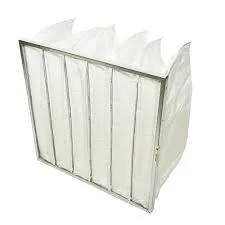
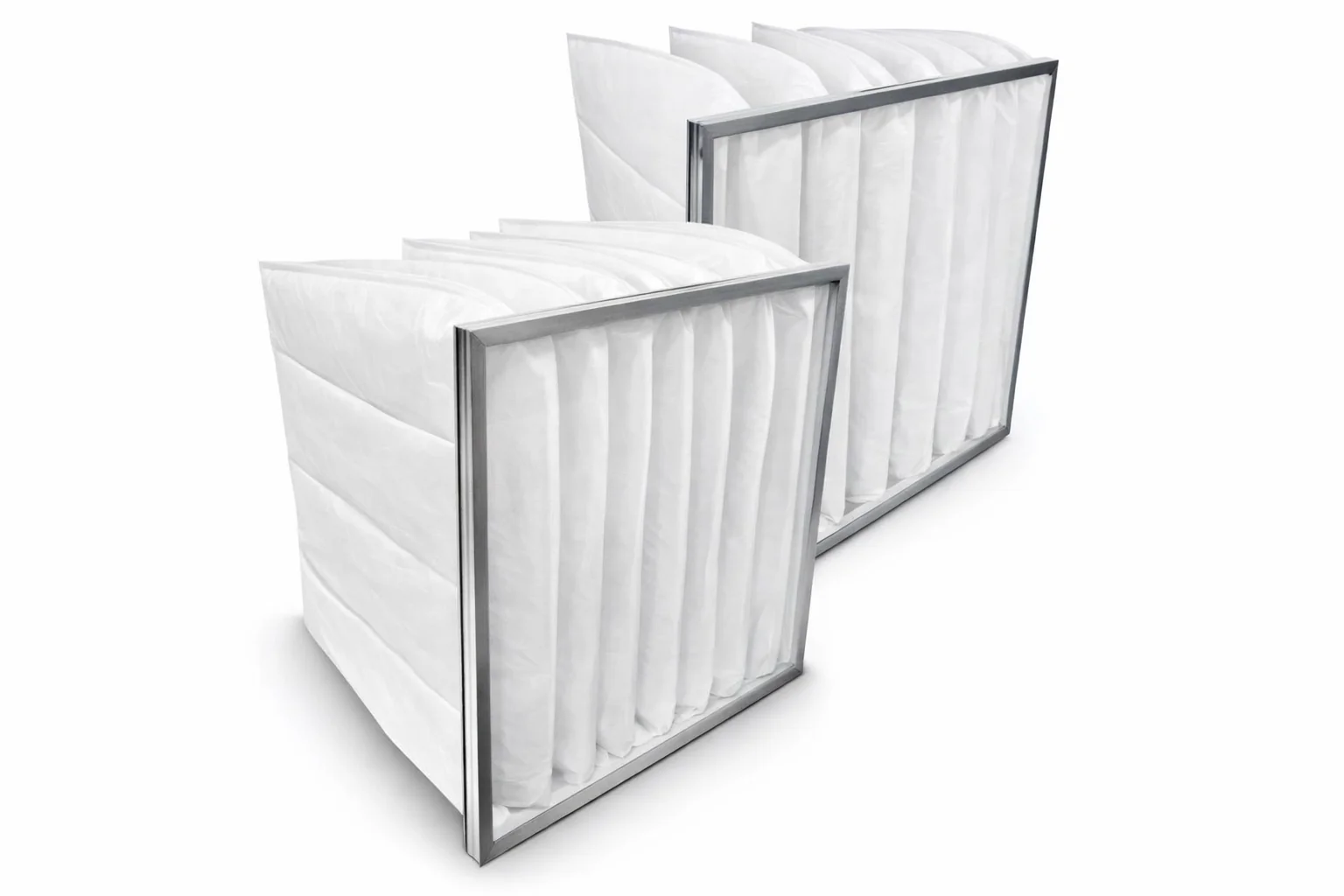
- Construction: Multiple wedge-shaped pockets sewn or welded into a galvanized steel, plastic, or aluminium header frame.
- Media Material: Typically high-performance synthetic melt-blown fibers or glass fiber media with a progressive structure.
Advantages of M5 Pocket Filters
- High Dust Holding Capacity: The deep pockets allow the filter to store a large volume of particulate matter before the pressure drop becomes too high.
- Aerodynamic Design: The wedge-shaped pockets ensure uniform airflow across the entire surface, preventing "dead zones" and maximizing efficiency.
- Cost-Effective: Because they last longer than mat filters, they reduce the frequency of maintenance shutdowns and replacement costs.
- Burst Resistance: High-quality pockets are ultrasonically welded to prevent leaking or bursting under high air pressure.
| Specifications — RE G4 Series | |
|---|---|
| Filter Class | G4 (Coarse Grade) |
| Standard Dimensions | 592 × 592 × 600mm |
| Pocket Options | 4 / 6 / 8 Pockets |
| Filter Area | 3.75 – 5.68 m² |
| Air Flow Range | 2050 – 4250 m³/hr |
| Initial Pressure Drop | 40 – 60 Pa |
| Final Pressure Drop (Replacement) | 250 Pa |
| Max Operating Temperature | 70°C – 80°C |
| Humidity Resistance | Up to 100% rel. hum. |
Application
Coarse-grade first-stage pre-filtration in air handling and paint booth supply air systems. Designed to protect finer downstream filter elements (M5, F5, F6, F7) from coarse particulate overloading — extending the service life of the entire downstream filter system.
Features & Benefits
- Coarse G4 rating provides optimal first-stage protection for downstream filter elements
- Deep pocket construction for high coarse-dust holding capacity
- Aerodynamic wedge pockets ensure uniform airflow distribution throughout the unit
- Ultrasonically welded burst-resistant construction for high-pressure durability
Special Features
- RE G4 Series — 592mm standard frame compatible with all major AHU configurations
- Compatible as first stage ahead of downstream M5/F5/F6/F7 filter stages
- Galvanized steel, plastic, or aluminium frame options
- Up to 100% relative humidity resistance
Available Series — Full Range
| Ref # | Model Name | Class | Size (mm) | Pockets | Area | Flow (m³/hr) |
|---|---|---|---|---|---|---|
| 1 | RE G4 Series | G4 | 592 × 592 × 600 | 4 / 6 / 8 | 3.75 – 5.68 m² | 2050 – 4250 |
| 2 | RE M5 Series | M5 | 592 × 592 × 600 | 4 / 6 / 8 | 3.75 – 5.68 m² | 2050 – 4250 |
| 3 | RE F5 Series | F5 | 592 × 592 × 600 | 4 / 6 / 8 | 3.75 – 5.68 m² | 2050 – 4250 |
| 4 | RE F6 Series | F6 | 592 × 592 × 600 | 4 / 6 / 8 | 3.75 – 5.68 m² | 2050 – 4250 |
| 5 | RE F7 Series | F7 | 592 × 592 × 600 | 4 / 6 / 8 | 3.75 – 5.68 m² | 2050 – 4250 |
Bag Filter
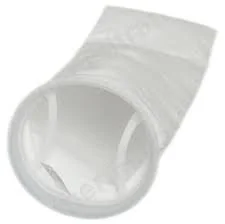
| Trade Size | Diameter (Inches) | Length (Inches) | Surface Area (Sq. Ft.) | Typical Flow Rate (GPM) |
|---|---|---|---|---|
| Size #1 | 7" | 16.5" | 2.0 | 80 – 100 |
| Size #2 | 7" | 32" | 4.4 | 160 – 200 |
| Size #3 | 4.1" | 8" | 0.5 | 20 – 30 |
| Size #4 | 4.1" | 14" | 1.0 | 40 – 50 |
Application
Industrial liquid filtration capturing solid contaminants from fluid and gas streams through surface and depth filtration mechanisms. Applicable in pharmaceutical manufacturing, boiler flue gas treatment, chemical processing, and general industrial liquid lines requiring particle removal.
Features & Benefits
- Woven bags (PP, Nylon, Cotton) for economical high-solids recovery with washable variants
- Non-woven felted bags for exceptional dirt-holding capacity in pharmaceutical applications
- Pulse Jet, Reverse Air, or Shaker cleaning system options for continuous operation
- 100% reliability check performed before every delivery
Special Features
- Customized solutions for specific flow rates and particle sizes
- Media selection in Polypropylene, Polyester, or PTFE based on temperature and chemical needs
- Anti-static woven variants available for sensitive environments
- Annual Maintenance Contracts (AMC) available
In the industrial landscape, effective liquid and gas filtration is paramount to maintaining a safe, clean, and productive environment. Rushikesh Enterprises provides high-quality bag filters designed to eliminate unwanted solid particles from fluid and gas streams. By implementing the right filtration strategy, businesses can significantly improve product quality and extend the service life of their equipment.
Bag Filter Working Principle
The core function of a bag filter is to capture contaminants via specialized fabric media, ensuring a clean output that meets stringent industrial requirements. Filtration is achieved through the physical capture of particles as they pass through the filter housing. Depending on the material, this occurs in two ways:
- Surface Filtration: Primarily used in woven bags where particles are blocked at the fabric's surface.
- Depth Filtration: Common in non-woven fabrics where contaminants are trapped throughout the thickness of the material.
Key capture mechanisms:
- Interception: Particles adhere directly to the filter fibers.
- Inertial Impaction: Larger, heavier particles collide with and become trapped in the media.
- Diffusion: Microscopic particles move randomly until they are caught within the fiber structure.
Types of Filter Bags
Choosing the correct bag is vital for operational efficiency. Rushikesh Enterprises categorizes the most common types as follows:
- Woven Bag Filters: Constructed from materials like Polypropylene, Nylon, or Cotton, these are defined by their weave style (e.g., Plain or Dutch weave). Highly economical, washable, and physically strong — available in anti-static variants and excellent for high-solids recovery.
- Non-Woven (Felted) Bag Filters: Engineered from needle-felted fibers and widely used in the pharmaceutical industry. Exceptional dirt-holding capacity, easy to install — ideal for powder processing and fine dust collection.
The Rushikesh Enterprises Manufacturing Standard
As a trusted manufacturer, we adhere to a rigorous process to ensure every filter withstands harsh industrial conditions:
- Material Selection: We utilize Polyester, Polypropylene, or PTFE based on temperature and chemical needs.
- Precision Fabrication: Bags are stitched and sealed to exact dimensions for high-pressure durability.
- Stringent Testing: Units undergo leakage, strength, and accuracy checks.
- Housing Assembly: We design stable steel housings for easy maintenance access.
- Final Inspection: A 100% reliability check is performed before any delivery.
Factors for High-Efficiency Filtration
To optimize your system, consider these critical variables:
- Filter Media Selection: Woven fabrics offer fine filtration, while felts are cost-effective for high-volume dirt.
- Operating Conditions: Monitoring temperature, humidity, and pressure prevents material degradation and clogging.
- Cleaning Mechanisms: Choosing between Pulse Jet (compressed air), Reverse Air, or Shaker systems ensures continuous operation and lower maintenance costs.
Why Choose Rushikesh Enterprises?
Selecting the right partner is just as important as selecting the right filter. Rushikesh Enterprises stands out by offering:
- Customized Solutions: Filters tailored to your specific flow rates and particle sizes.
- Quality Assurance: Adherence to industry standards to ensure consistent performance.
- Comprehensive Support: We provide installation assistance, performance testing, and Annual Maintenance Contracts (AMC).
- Expert Design: Our systems are built to eliminate "bypass" (leaking around the seal), which is a common failure in lower-quality designs.
Maintenance and Applications
Regular maintenance is non-negotiable to prevent system breakdowns and high energy costs. We recommend monitoring differential pressure and inspecting seals regularly to ensure peak performance. Key applications include:
- Pharmaceuticals: Achieving sterile environments and meeting GMP/FDA standards via high-retention filters.
- Boiler Systems: Capturing fly ash and pollutants from flue gases to reduce emissions and boost energy efficiency.
- Chemical & General Manufacturing: Protecting downstream equipment from solid contamination.
Cartridge Filter
 Click to enlarge
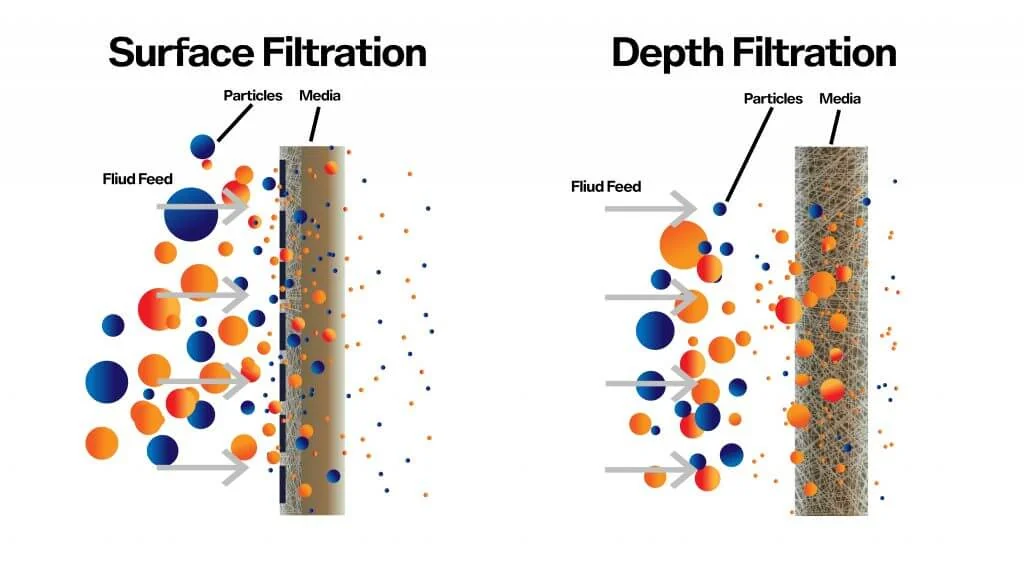
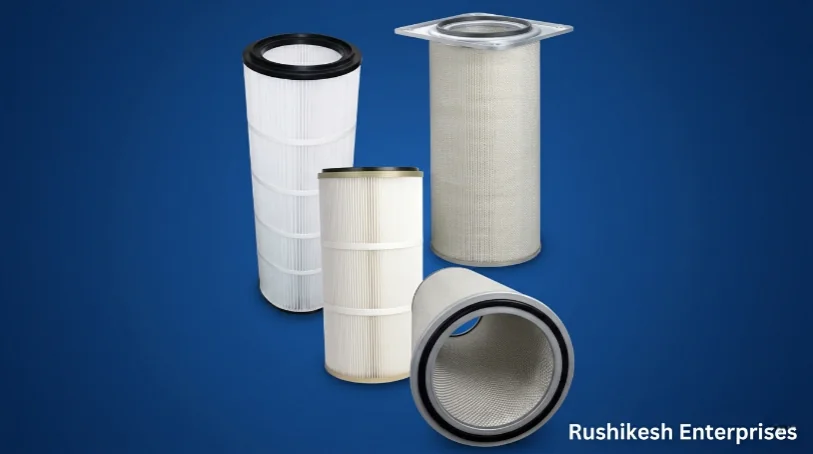
| Feature | Surface Filters | Depth Filters |
|---|---|---|
| Mechanism | Traps contaminants on the outer surface of the media. | Traps contaminants throughout the entire thickness of the media. |
| Path | Direct flow through a single layer. | A "torturous path" through multiple or thick layers. |
| Particle Size | Typically handles larger particles than the pore size. | Captures particles much smaller than the pore size. |
| Lifespan | Shorter; prone to "caking" quickly. | Longer; higher dirt-holding capacity. |
| Maintenance | Often washable/reusable (especially stainless steel). | Generally replaced once pores are saturated. |
| Examples | Pleated cartridges, cellulose filters. | String wound, ceramic, and sintered filters. |
Application
Tubular filtration component encased in a protective housing, removing particles, pollutants, and chemicals from process fluids. Liquid is forced through filter media, trapping contaminants while allowing clean fluid to exit through the core. Used in RO pre-filtration, brewing clarification, chemical processing, and protecting automotive manufacturing components.
Features & Benefits
- Surface filtration traps larger particles at outer media surface for easy servicing
- Depth filtration captures submicron particles throughout the entire media thickness
- Five-component precision construction ensures durability under high-pressure conditions
- Polypropylene for high chemical resistance; Activated Carbon for odor and chlorine removal
Special Features
- String Wound, Melt Blown, and High-Flow specialty configurations available
- Monitor differential pressure (replace at 10 psi) for optimal service life
- Suitable for pharmaceutical sterility, oil/gas refining, and electroplating applications
- Expert technical advice on right filtration setup available from our team
What is a Cartridge Filter?
A cartridge filter is a specialized, tubular filtration component designed to remove unwanted particles, pollutants, and chemicals from liquids. Encased in a protective housing, these cartridges act as a barrier to ensure that only clean, filtered solvent or water passes through to your equipment. From bulk sediment removal to capturing submicron particulates, they are essential for maintaining product purity and protecting machinery.
How Does It Work?
The process is straightforward but highly effective. Liquid enters the filter housing and is forced through the filter media. As the liquid passes through, the media traps contaminants while allowing the clean fluid to exit through the core. A cartridge is encased within a housing or casing and used to remove unwanted particles, pollutants, and chemicals from liquids.
Anatomy of a Filter Cartridge
To ensure durability and precision, Rushikesh Enterprises focuses on the five core components of a quality filter:
- Filter Media: The "heart" of the filter — Polypropylene, Polyester, Carbon, etc.
- Core: The central structure that prevents the filter from collapsing under high pressure.
- End Caps: Provide the seal between the cartridge and the housing.
- Gaskets / O-Rings: Prevent fluid from bypassing the filter media.
- Support Cage: An outer layer that maintains the cartridge's shape during heavy operation.
When and How to Replace Your Filter
The most accurate way to tell if your filter is clogged is by monitoring the differential pressure. When the pressure drop reaches a pre-set limit (commonly 10 psi), it is time for a change.
- Safety First: Shut down the system and fully depressurize.
- Drain: Open the air vent and drain valves to empty the housing.
- Access: Remove the housing lid, wing nuts, and alignment plate.
- Extract: Carefully pull out the old cartridges and check the housing for corrosion.
- Install: Remove the protective wrap from new cartridges and seat them firmly.
- Secure: Reinstall the springs, alignment plate, and lid (lubricate O-rings if necessary).
- Restart: Run water to purge air, then close the vent valve once the flow is steady.
Our Product Range
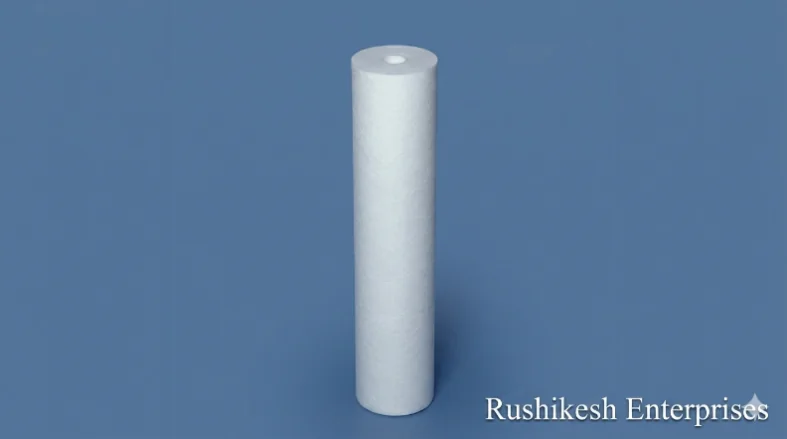
- Polypropylene — Solid Spun Melt-Blown Cartridge: High chemical resistance for general industrial use. Features a dense, solid construction made from spun polypropylene — ideal for trapping contaminants within its layered media. Offers high-strength and excellent dirt-holding capacity, representing the classic depth filter in our line.
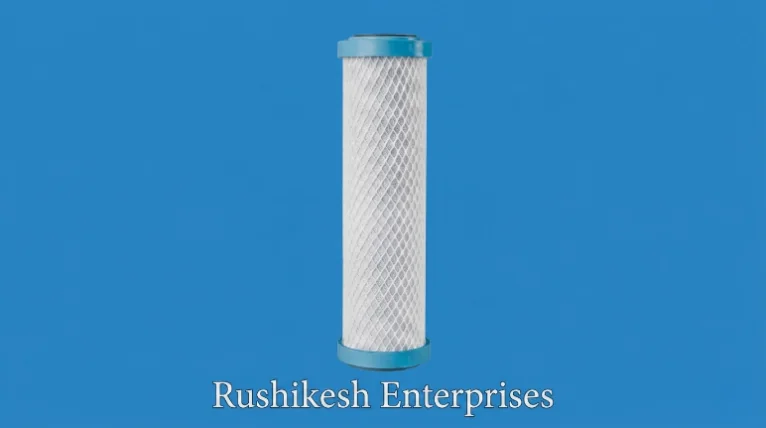
- Activated Carbon — Carbon Block & Netting Cartridge: Ideal for removing odors, chlorine, and organic compounds — a key component for clean drinking water. Features distinctive external white diamond-mesh netting over a carbon block media with characteristic blue end caps, making it a specialized solution for water treatment.
- Specialty Options — Pleated & Fabric Cartridges: Including String Wound, Melt Blown, and High-Flow cartridges. This range includes pleated media cartridges and smooth-finish filters, covering a variety of materials and end cap designs — versatile for high-flow and fine-filtration applications across many industries.
Diverse Applications
- Water Treatment: Pre-filtration for RO membranes and pool systems.
- Food & Beverage: Brewing, wine clarification, and ingredient purification.
- Industrial: Oil and gas refining, chemical processing, and electroplating.
- Manufacturing: Protecting automotive components and purifying inks or paints.
- Medical: Ensuring sterility in pharmaceutical and cosmetic production.
Expert Advice: Need expert advice on the right filtration setup for your facility? Talk to our experts at Rushikesh Enterprises today.
F8 High Temperature Filter
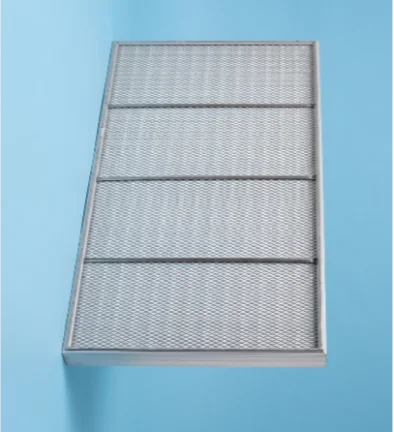 Click to enlarge
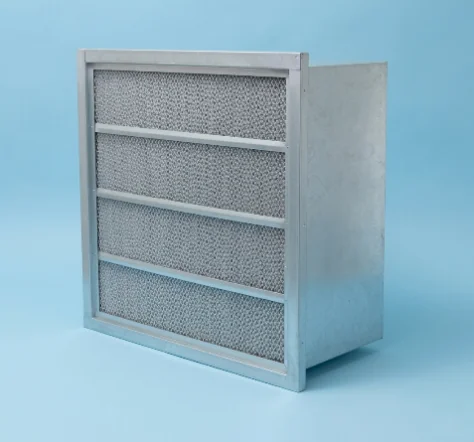
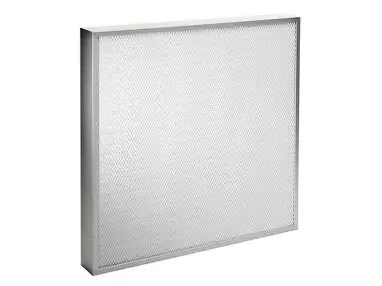
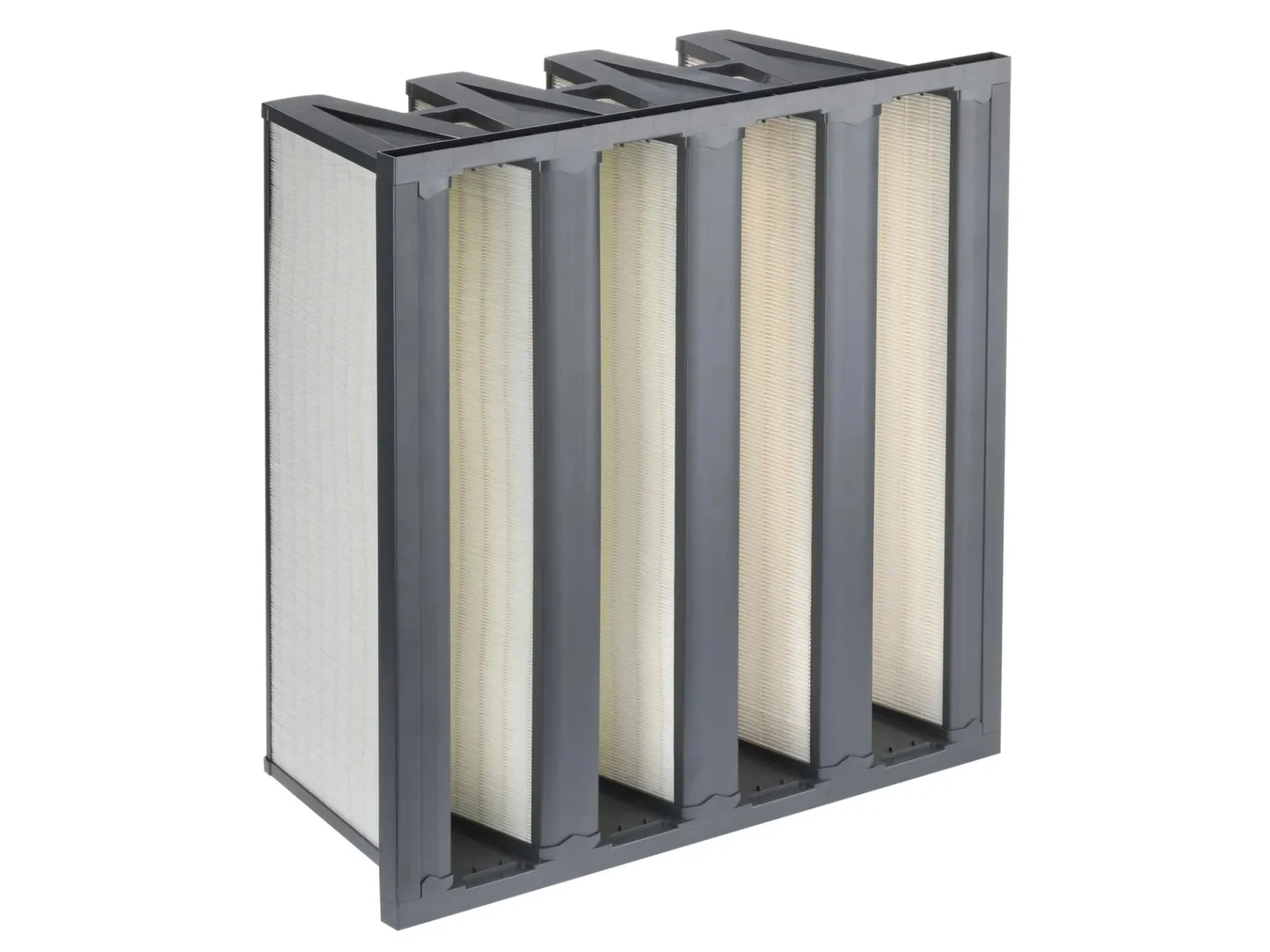
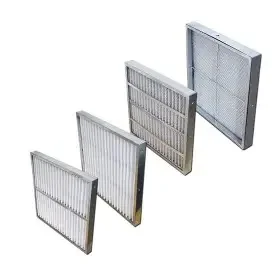
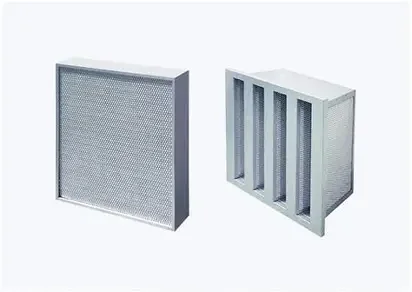
| Sr. No. | Filter Class | ISO 16890 Rating | Dimensions (mm) | Air Flow (m³/hr) | Initial Pressure Drop (ΔP) |
|---|---|---|---|---|---|
| 01 | F8 | ePM1 70% | 915 × 457 × 55 | 3400 | 50 Pa |
| 02 | F8 | ePM1 70% | 305 × 592 × 292 | 2800 | 50 Pa |
| 03 | F8 | ePM1 70% | 592 × 592 × 292 | 3100 | 50 Pa |
| 04 | F8 | ePM1 70% | 610 × 610 × 120 | 3500 | 50 Pa |
Application
High-efficiency air filtration engineered for sustained thermal stress environments — automotive paint booth ovens, industrial manufacturing processes, and sterilization facilities. F8-rated filters maintain structural integrity without degrading under extreme heat, ensuring fine particulate filtration at continuous high temperatures.
Features & Benefits
- Engineered to maintain structural integrity without degrading at 120°C – 350°C continuous operation
- Captures industrial particulates, fine dust, and manufacturing debris
- Removes biological pollutants including mold, bacteria, and viruses in high-heat environments
- Protects high-value downstream machinery and equipment from airborne impurities
Special Features
- Customized temperature ratings available to match specific process requirements
- Flexible size configurations to fit any existing system architecture
- Electrodeposition (ED) paint oven compatible
- 4 standard configurations covering 2800 – 3500 m³/hr air flow range
Rushikesh Enterprises proudly provides some of the most advanced high-temperature air filtration solutions on the market. Engineered to perform under thermal stress, our filters are specifically designed to operate reliably in environments ranging from 120°C to 350°C.
These filters are a critical necessity for industries utilizing high-heat air streams, including automotive paint booth ovens, industrial manufacturing, and sterilization facilities.
Engineering & Versatility
At Rushikesh Enterprises, we utilize cutting-edge media and reinforced construction techniques to ensure our filters maintain structural integrity without degrading or failing under extreme heat. We provide a diverse catalogue of options to meet your specific requirements:
- Customized Ratings: A wide range of temperature thresholds to match your specific process needs.
- Flexible Configurations: Available in various shapes and sizes to fit any existing system architecture.
Performance & Protection
Our high-temperature range is essential for maintaining air purity and safety in volatile thermal environments. These filters are highly efficient at capturing a broad spectrum of contaminants, including:
- Industrial Particulates: Fine dust and manufacturing debris.
- Biological Pollutants: Mold, bacteria, and viruses.
- Sensitive Equipment Protection: By removing airborne impurities, our filters help prevent damage to high-value machinery and improve overall indoor air quality.
Whether you are baking Electrodeposition paint or maintaining a sterile laboratory, Rushikesh Enterprises delivers the durability and precision required to keep your operations running safely and efficiently.